Foundation Patching in Dripping Springs, TX
Structural Foundation Patching Specialists Serving Dripping Springs, TX
Need foundation patching in Dripping Springs, TX? We fix cracks in Hill Country slabs & stem walls. Call (512) 883-7253 for a free inspection today.
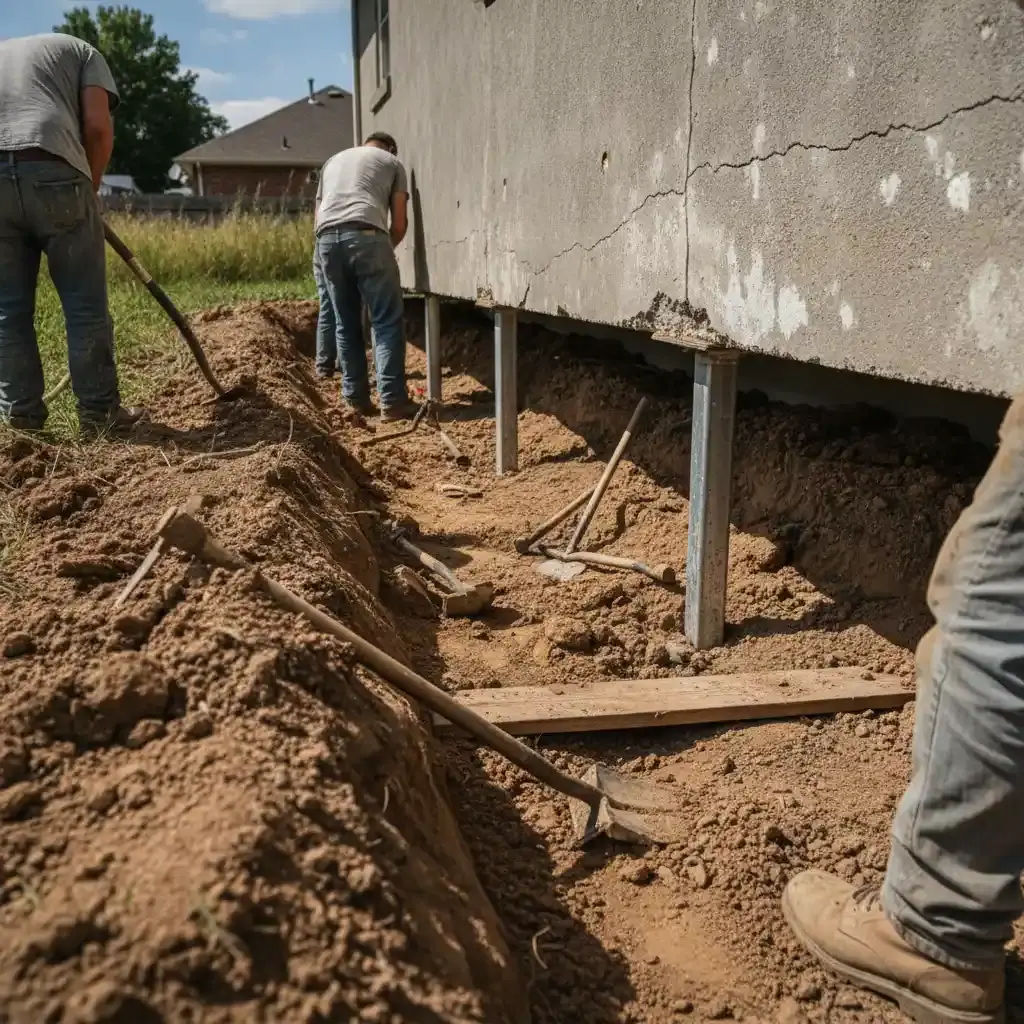
Foundation patching is a targeted repair method designed to seal cracks, fill voids, and restore structural integrity to damaged concrete and masonry foundations. Unlike full foundation replacement, patching addresses localized damage before it escalates into a costlier, more invasive problem. For homeowners and business owners in Dripping Springs, TX, this service is particularly important given the region’s expansive clay soils, dramatic seasonal moisture swings, and the limestone-heavy geology that defines the Texas Hill Country.
At Dripping Springs Foundation Repair Company, we specialize in diagnosing and executing precision foundation patching solutions tailored to the unique demands of structures throughout Dripping Springs and the surrounding communities. Whether your home sits on the rolling limestone ridges near Usener Road or in a newer subdivision off Highway 290, our team brings deep local knowledge and technical expertise to every project. Call us today at (512) 883-7253 to schedule your inspection.
Understanding Foundation Patching
Foundation patching refers to the application of repair materials—such as hydraulic cement, epoxy injections, polyurethane foam, or specialized concrete mortar—to cracks, spalls, and voids found in a building’s foundation. This practice has roots in early 20th-century masonry repair traditions and has evolved significantly with the introduction of polymer-modified compounds and injection technologies in the 1970s and 1980s. Today, modern patching materials can achieve compressive strengths exceeding 6,000 psi, making them highly effective for restoring load-bearing capacity to compromised sections.
In the context of Dripping Springs, foundation patching most commonly applies to slab-on-grade foundations, which dominate residential construction across Hays County. Many homes built during the development booms of the 1990s through the 2010s used post-tensioned slab designs, which can develop particular stress fractures when the underlying soil shifts. Pier-and-beam structures—more common in older homes built before 1980 near the historic downtown Mercer Street corridor—also benefit from patching to seal moisture infiltration points in their concrete grade beams.
Read moreShow less
Crawl space foundations, though less prevalent in Dripping Springs, are found in some ranch-style properties on larger acreage lots west of RR 12. These structures frequently require patching where concrete stem walls meet the soil grade, as water infiltration can rapidly erode mortar joints. Learn more about our Crawl Space Repair services to understand how patching integrates with broader moisture management solutions.
Patching is most effective when performed as a proactive or early-stage intervention. When cracks are still hairline to moderate in width (under 1/4 inch), patching alone can fully stabilize the affected area. Wider or actively moving cracks typically require patching in conjunction with structural foundation repair methods such as pier installation. Understanding which category your damage falls into is the first step our team takes during every inspection.
Why Foundation Patching Is Needed in Dripping Springs, TX
Dripping Springs sits at the eastern edge of the Edwards Plateau, a geological zone characterized by thin topsoil layers resting atop fractured limestone bedrock. Beneath that limestone, and especially in the lower-elevation areas flanking Onion Creek and Barton Creek tributaries, lies a layer of expansive Montmorillonite clay—a soil type that can swell by as much as 30 to 40 percent when saturated and shrink dramatically during drought conditions. This cycle of expansion and contraction exerts enormous lateral and vertical pressure on concrete foundations, creating the cracks and voids that patching is designed to address.
The climate of Dripping Springs amplifies these soil dynamics. Average annual rainfall is approximately 32 inches, but that moisture arrives unevenly—heavy spring storms from March through May can deliver 4 to 6 inches in a single event, followed by brutal summer droughts where ground temperatures at the 5-inch depth can exceed 110°F. This pattern was particularly severe during the 2011 Texas drought, which caused widespread foundation movement across Hays County, and again during the extended 2022–2023 drought cycle that prompted a notable surge in foundation repair calls throughout communities like Belterra, Caliterra, and Headwaters—three of Dripping Springs’ largest planned developments.
Read moreShow less
Belterra, developed primarily between 2002 and 2015 along Nutty Brown Road and FM 1826, sits on a transitional soil zone where sandy loam meets clay-rich subsoil. Many slab foundations here have shown center-lift and edge-settlement patterns within 10 to 15 years of construction, creating the diagonal stair-step cracks in brick veneer that are classic indicators of foundation movement requiring patching. Caliterra, a newer community developed after 2015 near the Pedernales River floodplain, faces additional challenges from flood scour events—most notably during the October 2018 flash floods that affected portions of Hays County—which can undermine soil beneath exterior grade beams.
The Headwaters development, situated on higher limestone ridge terrain northwest of Highway 290, presents a different but equally significant challenge: shallow bedrock depth (sometimes as little as 12 to 18 inches below grade) means foundations transfer load directly to rock that may be fractured along natural joint planes. When water infiltrates these fractures, it can dissolve limestone and create subsidence voids beneath slabs—a karst geology phenomenon that requires precision grouting and patching to address.
Older neighborhoods near the historic Dripping Springs town square, including properties along Mercer Street and Old Fitzhugh Road, often feature foundations from the 1950s through 1970s that used lower water-cement ratios and minimal reinforcement by today’s standards. These foundations are inherently more porous and prone to spalling, making periodic patching an essential part of their long-term maintenance. Schedule a foundation inspection to determine exactly which conditions apply to your property.
Free, no-obligation estimates
Talk to Dripping Springs Foundation Repair Company
Tell us what you need and we’ll take it from there.
Signs You Need Foundation Patching in Dripping Springs
Interior Warning Signs
- Diagonal cracks running from the corners of door frames or window openings at a 45-degree angle
- Floors that slope or feel uneven, particularly noticeable when rolling objects across tile or hardwood
- Doors and windows that stick, refuse to latch, or have visible gaps at the top or bottom of the frame
- Cracks in drywall seams, especially those that reappear after being patched with joint compound
Exterior Warning Signs
- Stair-step cracking in brick mortar joints along exterior walls
- Horizontal or vertical cracks in the visible portion of the concrete foundation stem wall
- Gaps between the foundation and exterior wood trim, siding, or brick ledge
- Separation of the porch slab or attached garage slab from the main foundation
Urgency Indicators
- Any crack wider than 1/4 inch or showing displacement where one side is higher than the other
- Water seeping through foundation cracks after rainfall events—especially relevant after Hill Country storms
- Cracks that have visibly grown in length or width since you first noticed them
If you observe any of the above signs, contact our team at (512) 883-7253 promptly. Early-stage patching is dramatically less expensive than waiting until structural repair becomes unavoidable.
Our process
Our Foundation Patching Process in Dripping Springs
- 01
Initial Consultation and Site Review (Day 1)
We begin with a phone or in-person consultation to gather information about your property’s construction era, any known drainage issues, and the symptoms you’ve observed. For Dripping Springs properties, we specifically ask about proximity to creek drainages,
- 02
Comprehensive Foundation Inspection (Day 1–2)
Our inspector performs a full foundation inspection, using a zip level or optical level to map elevation changes across the slab, a crack comparator gauge to measure crack widths precisely, and a moisture meter to assess soil saturation levels around the perim
- 03
Diagnostic Report and Repair Plan (Day 2–3)
Within 24 to 48 hours of the inspection, we provide a written report identifying all patching locations, recommending the appropriate repair method for each crack type, and outlining whether any underlying structural issues require attention before patching pr
- 04
Surface Preparation (Day of Repair)
All cracks and voids are cleaned using wire brushes and compressed air to remove loose concrete, soil, and organic debris. In Dripping Springs, where limestone dust and cedar pollen can pack densely into cracks, thorough cleaning is critical to adhesion succes
- 05
Material Application (Day of Repair)
Depending on crack type and location, we apply the appropriate patching compound. Hairline cracks receive low-viscosity epoxy injection; moderate cracks receive hydraulic cement or polyurethane foam; larger voids beneath the slab receive pressure grouting. Eac
- 06
Curing and Quality Check (24–72 Hours Post-Application)
Patch materials are allowed to cure per manufacturer specifications—typically 24 to 72 hours depending on ambient temperature. Given Dripping Springs’ summer heat, we schedule exterior work for morning hours when surface temperatures are below 90°F to prevent
- 07
Final Walkthrough and Documentation
We conduct a final walkthrough with the property owner, photograph all completed repairs, and provide written documentation of the work performed for your records and any future real estate transactions.
Foundation Patching Methods and Approaches
Epoxy Injection
Epoxy injection is the gold standard for sealing structural cracks in concrete slabs and walls. A two-component epoxy resin is injected under low pressure into cracks as narrow as 0.002 inches. Once cured, epoxy bonds are typically stronger than the surrounding concrete, achieving tensile strengths above 7,000 psi. This method is ideal for hairline to moderate cracks in Dripping Springs slab foundations that are no longer actively moving.
Polyurethane Foam Injection
Where moisture infiltration is the primary concern—such as in below-grade stem walls or crawl space foundations in the Bear Creek and Cedar Valley areas—polyurethane foam injection provides a flexible, waterproof seal that accommodates minor ongoing movement. The foam expands to fill irregular voids and cures within minutes, even in the presence of water.
Hydraulic Cement Patching
For larger surface spalls, honeycombed areas, and deteriorated concrete sections, hydraulic cement mortar provides rapid, durable fill. It sets in 3 to 5 minutes even in wet conditions, making it particularly useful for patching foundation walls in flood-prone low areas near Onion Creek tributaries.
Slabjacking and Void Grouting
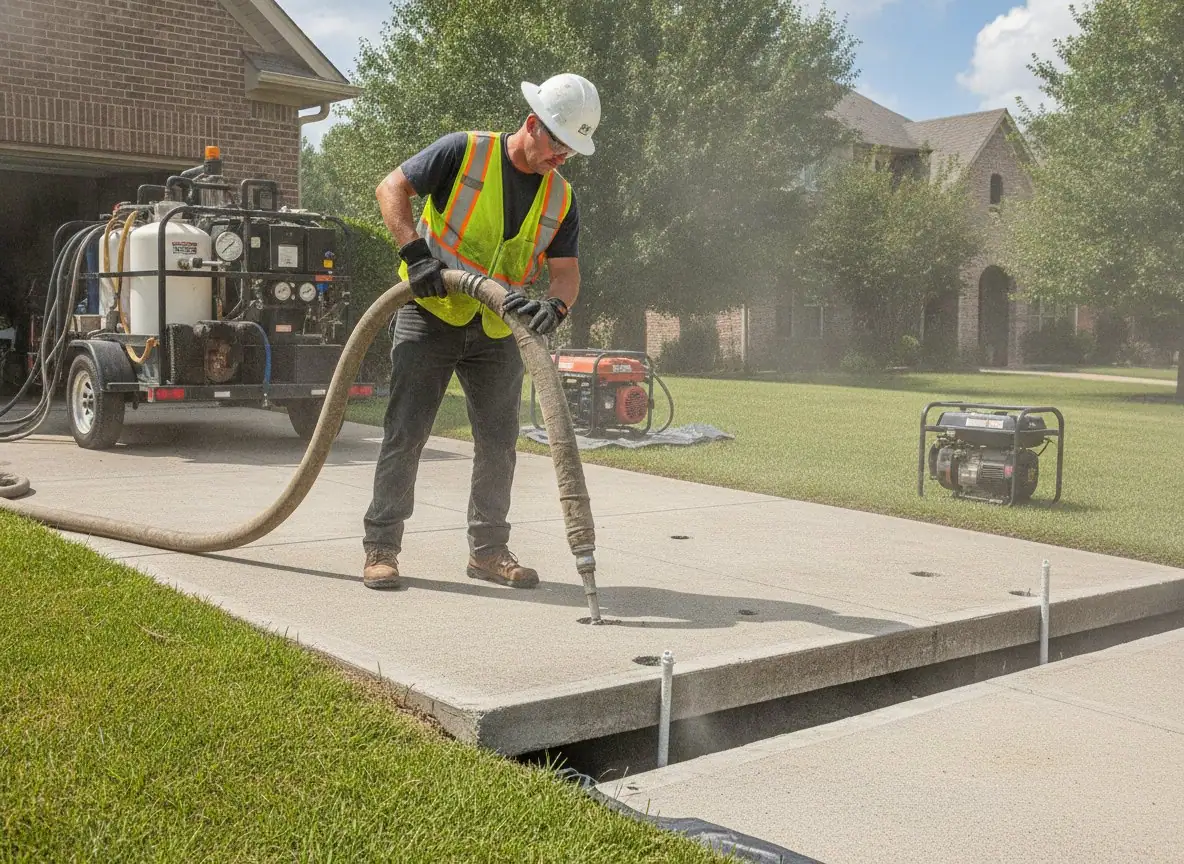
When voids exist beneath a settled slab—a common karst-related phenomenon in Dripping Springs’ limestone terrain—we use pressure grouting to inject a cement-lime slurry beneath the slab. This both fills the void and gently re-levels the concrete. This approach is often combined with surface patching for comprehensive concrete foundation repair.
Foundation Patching Cost in Dripping Springs, TX
The cost of foundation patching in Dripping Springs varies based on the number of cracks, their size, depth, accessibility, and the repair method required. Below are general ranges based on current regional market pricing:
- Single hairline crack (epoxy injection): $300–$600 per crack
- Moderate crack repair (hydraulic cement or polyurethane): $500–$1,200 per location
- Multiple cracks or larger surface spalling: $1,500–$4,500 for a full perimeter treatment
- Void grouting beneath slab: $2,000–$6,000 depending on void size and grout volume required
- Full foundation patching combined with drainage correction: $4,000–$10,000+
Several factors influence where your project falls within these ranges. Properties in Caliterra and Headwaters with deep void issues typically fall toward the higher end due to material volume. Older homes on Mercer Street with deteriorated 1960s concrete may require additional surface preparation that adds labor cost. Conversely, newer homes in Belterra where damage is caught early often require only minimal epoxy injection at the lower end of the range.
Read moreShow less
It is important to note that foundation patching costs in Dripping Springs are generally 10 to 15 percent higher than the Austin metro average, reflecting the longer drive times for material delivery and the specialized knowledge required to work with Hill Country geology. For a precise written estimate, contact us at (512) 883-7253. Request your free inspection today.
Neighborhoods We Serve in and Around Dripping Springs
Belterra
This large master-planned community developed primarily between 2002 and 2015 along FM 1826 features homes primarily on slab-on-grade foundations. The transitional clay-sandy loam soil boundary running through Belterra creates differential settlement challenges that frequently manifest as stair-step cracks in brick veneer and interior drywall separations.
Caliterra
Located near the Pedernales River, Caliterra’s homes face flood scour risk and high-plasticity clay soils that swell significantly with seasonal rainfall. Many homes here are less than ten years old but are already showing early-stage cracking that benefits from prompt patching intervention.
Headwaters
Situated on limestone ridge terrain, Headwaters properties often encounter the karst void and shallow bedrock challenges unique to the Edwards Plateau. Void grouting combined with surface patching is the most common repair scenario we address in this upscale northwest Dripping Springs community.
Historic Downtown Area (Mercer Street Corridor)
Older residential and commercial properties in the original Dripping Springs town center often have pier-and-beam or early slab foundations from the 1950s–1970s. These structures require careful foundation restoration patching to address decades of weathering.
Foundation Maintenance Tips for Dripping Springs Homeowners
- Maintain consistent soil moisture: Install a soaker hose system 12 to 18 inches from your foundation perimeter and run it during extended dry periods—a critical practice during Dripping Springs’ summer droughts—to prevent soil shrinkage.
- Ensure positive drainage grading: The ground should slope away from your foundation at a minimum of 6 inches over the first 10 feet. Given Hill Country rainfall intensity, proper grading prevents the rapid saturation events that cause clay soil swell.
- Clean gutters and extend downspouts: Route downspout discharge at least 5 feet from the foundation. Concentrated roof runoff is one of the top causes of localized slab edge damage in Dripping Springs neighborhoods.
- Monitor and repair plumbing leaks promptly: Slab leaks are a significant foundation risk in post-tensioned slabs common throughout Hays County. Annual plumbing pressure tests are worthwhile preventative measures.
- Manage large trees and shrubs: Native cedar and live oak roots can extract enormous moisture from soil, contributing to differential drying near foundations. Maintain a buffer of at least 10 feet between large trees and your foundation.
- Inspect foundation visually each spring and fall: Walk your perimeter after the wet and dry seasons to check for new cracks or changes in existing ones. Early detection keeps patching costs minimal.
- Avoid overwatering foundation-adjacent landscaping: Excessive irrigation creates the same soil expansion issues as heavy rainfall. Use drip irrigation targeted at plant root zones rather than flooding the soil near your slab.
Why Choose Dripping Springs Foundation Repair Company
When it comes to foundation patching in Dripping Springs, TX, local expertise is not optional—it is essential. Our team has hands-on experience working across the full range of geological conditions found in the Texas Hill Country, from the expansive Montmorillonite clay zones in lower Belterra to the limestone karst terrain of Headwaters. We understand how Hays County’s dramatic seasonal moisture swings affect concrete structures differently than foundations in flat, clay-heavy regions like Houston or Dallas.
We offer comprehensive foundation inspections as the foundation of every repair recommendation—we never recommend patching when structural repair is what’s truly needed, and we never upsell structural repairs when patching is sufficient. Our service area covers all of Dripping Springs and extends to Driftwood, Wimberley, Bee Cave, Lakeway, Buda, Kyle, Austin, and beyond, meaning we are genuinely local and familiar with every community’s unique building stock and soil profile.
Read moreShow less
For transparent pricing, honest assessments, and precision workmanship built around Hill Country conditions, Dripping Springs Foundation Repair Company is your trusted local partner. Call (512) 883-7253 to speak with our team today.
FAQ
Frequently Asked Questions About Foundation Patching in Dripping Springs, TX
How much does foundation patching cost in Dripping Springs?
Foundation patching in Dripping Springs typically ranges from $300 to $600 for a single hairline crack treated with epoxy injection, up to $6,000 or more for complex void grouting projects. Most residential patching projects in the area fall between $1,500 and $4,500. Dripping Springs pricing runs roughly 10–15 percent above Austin metro averages due to Hill Country logistics and geological complexity.
How long does foundation patching take?
Most residential patching jobs in Dripping Springs are completed in one day. Larger projects involving multiple void locations or extensive perimeter treatment may take two days. After application, patch materials require 24 to 72 hours of curing time before the area should be subjected to normal loads or foot traffic.
Is foundation patching a permanent fix?
Patching is permanent for cracks that have stabilized—meaning the underlying soil movement has ceased. If soil conditions continue to shift (which is common in Dripping Springs’ clay zones without proper drainage correction), new cracks can form adjacent to patched areas. Our inspections identify whether movement is active or historical, and we recommend complementary drainage or structural solutions when movement is ongoing.
Can Dripping Springs’ limestone geology affect foundation patching success?
Yes. When foundations bear directly on fractured limestone—common in neighborhoods like Headwaters— patching must be preceded by void grouting to stabilize the bearing surface. Patching over an unfilled void will fail. Our inspectors specifically assess bedrock depth and integrity during every Dripping Springs inspection to account for this factor.
What is the difference between foundation patching and foundation repair?
Foundation patching addresses surface and structural cracks in existing concrete using fillers and injection compounds. Foundation repair refers to deeper interventions—such as installing steel push piers or helical piers—that correct the underlying settlement causing the cracks. Patching is often performed alongside or after structural repair to seal the corrected foundation.
Do I need a permit for foundation patching in Dripping Springs?
In most cases, cosmetic and structural patching of existing foundations does not require a building permit in the City of Dripping Springs or unincorporated Hays County. However, if patching is combined with significant structural alterations, permits may apply. We advise clients on permitting requirements specific to their property address as part of our pre-repair process.
How do I know if my Belterra or Caliterra home needs patching or full structural repair?
The key indicators that distinguish patching from structural repair needs include crack width (over 1/4 inch typically signals structural involvement), crack displacement (one side higher than the other), and the rate of change (rapidly widening cracks indicate ongoing movement). Homes in Caliterra near the Pedernales floodplain and in lower Belterra clay zones are more likely to need combined approaches. Our inspection will give you a definitive answer.
Can foundation patching be done during the summer heat in Dripping Springs?
Yes, with proper scheduling. We perform exterior concrete work during early morning hours when surface temperatures are below 90°F to ensure optimal adhesion and curing. Summer is actually a common time for patching in Dripping Springs because drought-induced soil shrinkage reveals cracks that were hidden during wetter months. We adjust our materials and scheduling to accommodate the Hill Country climate year-round.
Get Expert Foundation Patching in Dripping Springs, TX Today
Don’t let a small crack become a major structural problem. Foundation patching is most effective—and most affordable—when addressed early. If you’ve noticed cracks in your slab, stem wall, or interior finishes, our team at Dripping Springs Foundation Repair Company is ready to provide an honest, thorough assessment and a clear repair plan built around your property’s specific Hill Country conditions.
We serve Dripping Springs, Belterra, Caliterra, Headwaters, Driftwood, Wimberley, Bee Cave, Lakeway, Buda, Kyle, Austin, and all surrounding communities throughout Hays and Travis Counties.
Call us now at (512) 883-7253 to schedule your foundation inspection or to request a free estimate. You can also contact us online and a member of our local team will respond within one business day.
Get in touch
Find foundation repair help near you
Request a free estimate online or give us a call — our team will follow up quickly.
- Call us(512) 883-7253
- Visit4002 US-290 Unit a7, Dripping Springs, TX 78620
- HoursMon-Sun: 7:00 am – 7:00 pm