Slab Foundation Repair Cost in Dripping Springs, TX
Transparent Slab Foundation Repair Cost Pricing for Dripping Springs, TX Homeowners — Free Estimates
Discover slab foundation repair costs in Dripping Springs, TX. Get transparent pricing, local soil expertise & a free inspection. Call (512) 883-7253 today.
Understanding the true cost of slab foundation repair in Dripping Springs, TX begins with recognizing what makes this region uniquely challenging for concrete slabs. Dripping Springs sits atop the eastern edge of the Edwards Plateau, where expansive clay soils shift dramatically with seasonal moisture changes, and where the Hill Country limestone bedrock creates unpredictable settlement patterns beneath your home.
At Dripping Springs Foundation Repair Company, we specialize in accurate, transparent cost assessments for slab foundation repair across Dripping Springs and the surrounding Hill Country communities. Whether you own a newer build in Caliterra or an older ranch-style home off Ranch Road 12, our team evaluates every factor that influences your repair investment — from soil conditions and crack severity to drainage issues and pier depth requirements.
Read moreShow less
Slab foundation repair is not a one-size-fits-all service, and neither is our pricing. Call us today at (512) 883-7253 for a detailed, no-obligation inspection and cost estimate tailored to your Dripping Springs property.
Understanding Slab Foundation Repair Cost in Dripping Springs, TX
A slab foundation is a single, continuous layer of poured concrete — typically four to six inches thick — that sits directly on the ground and serves as both the floor and the structural base of a home. In Dripping Springs and throughout Central Texas, slab-on-grade construction became the dominant building method in the post-1960s era as the region experienced rapid residential growth. Today, the vast majority of homes built in Dripping Springs after 1975 rest on concrete slab foundations.
Slab foundation repair refers to the process of restoring a damaged or settling concrete slab to its original position and structural integrity. The cost of this repair varies considerably depending on the type of damage, the size of the affected area, the method of repair required, and local soil and environmental conditions unique to the Hill Country.
Read moreShow less
Historically, Dripping Springs was primarily ranch land and agricultural property. As the city transformed into one of the fastest-growing communities in the Austin metropolitan area — particularly during the 2010s and into the 2020s — thousands of new homes were constructed on soils that had never been subjected to the weight of residential structures. Builders working in high-demand markets sometimes rushed site preparation, contributing to early settlement issues that homeowners are now encountering five to fifteen years later.
The cost of slab foundation repair in Dripping Springs typically ranges from a few hundred dollars for minor patching work to tens of thousands of dollars for comprehensive piering and leveling on larger affected homes. Understanding what drives these costs — and what distinguishes a credible repair investment from an unnecessary upsell — is the foundation of our client education process.
Commercial properties in Dripping Springs, including retail centers along US-290 and the growing number of event venues in the area, also face slab-related challenges and may require more intensive repair approaches due to larger footprints and higher load requirements. Learn more about our commercial foundation repair services.
Why Slab Foundation Repair Is Needed in Dripping Springs, TX
Expansive Clay Soils of the Hays County Region
Much of the residential development in Dripping Springs — particularly in neighborhoods like Caliterra, Headwaters, and Belterra — sits atop Vertic clay soils with a plasticity index exceeding 40, meaning they swell and contract dramatically based on moisture content. During dry periods, these soils can shrink by as much as three to five inches vertically, pulling away from the underside of slabs and creating voids that lead to cracking and differential settlement. When rain returns, the same soils expand, pushing upward against the concrete and causing heave in different zones of the foundation.
The Drought-Flood Cycle of the Texas Hill Country
Dripping Springs averages approximately 32 inches of rainfall annually, but that precipitation is highly irregular. The region experienced severe drought conditions from 2010 through 2013, followed by catastrophic flooding events in 2015 when the Blanco River watershed received over 12 inches of rain in a single night. This dramatic oscillation between drought and saturation is one of the most destructive forces acting on slab foundations in the area. Each cycle of soil expansion and contraction places cumulative stress on the concrete, widening existing cracks and creating new ones.
Edwards Plateau Limestone and Karst Topography
Beneath the clay layer, Dripping Springs sits atop the Edwards Aquifer recharge zone, a karst limestone formation riddled with natural fractures, voids, and cavities. When surface water percolates through the clay and enters the limestone, it can dissolve carbonate rock over decades, creating subsurface voids that cause sudden, dramatic foundation settlement with little warning. Homeowners in the Founders Park area and along RM 150 have encountered this issue more frequently due to the shallower depth of limestone in those zones.
Seasonal Tree Root Activity
The mature live oaks, cedar elms, and Texas persimmons that give Dripping Springs its characteristic Hill Country aesthetic also pose a real threat to slab foundations. During drought conditions, the root systems of trees within 20 to 30 feet of a home’s perimeter aggressively draw moisture from the soil directly beneath the slab, accelerating the shrinkage process and creating localized settlement zones that can be difficult and costly to repair.
Construction-Era Variables
Many homes built in Dripping Springs during the 2005–2015 building boom were constructed under time and cost pressures that occasionally compromised soil pre-treatment, post-tensioning specifications, or proper drainage planning. Homes that did not receive adequate fill compaction or that were built on cut-and-fill lots along the area’s many slopes are now showing the structural consequences of those shortcuts, adding to the overall demand for slab foundation repair services in the region.
Free, no-obligation estimates
Talk to Dripping Springs Foundation Repair Company
Tell us what you need and we’ll take it from there.
Signs You Need Slab Foundation Repair
Interior Warning Signs
- Diagonal cracks in drywall, especially above door frames and window corners
- Floors that slope or feel bouncy in localized areas
- Doors or windows that stick, won’t latch, or have visible gaps at frames
- Cracks in ceramic tile floors, particularly in kitchens and bathrooms
- Gaps between baseboards and the floor or ceiling
Exterior Warning Signs
- Stair-step cracking in brick veneer or mortar joints
- Horizontal or vertical cracks in the concrete slab edge or stem wall
- Separation between the foundation and the exterior brick cladding
- Standing water pooling along the foundation perimeter after rain
Urgency Indicators
If cracks are wider than one-quarter inch, if doors on multiple sides of the home are simultaneously sticking, or if you notice sudden new cracking after a significant rain event or extended drought, these are indicators requiring immediate professional assessment. Delaying inspection in Dripping Springs’ active soil environment can allow moderate damage to escalate rapidly. Schedule your foundation inspection today.
Our process
Our Slab Foundation Repair Process in Dripping Springs
Our repair process is structured to deliver accurate diagnosis and lasting results in the specific geological conditions of the Dripping Springs area. We do not apply generic repair templates — every step is adapted to your property’s unique soil profile, drainage history, and structural condition.
- 01
Comprehensive Foundation Inspection (Day 1 — 2 to 3 Hours)
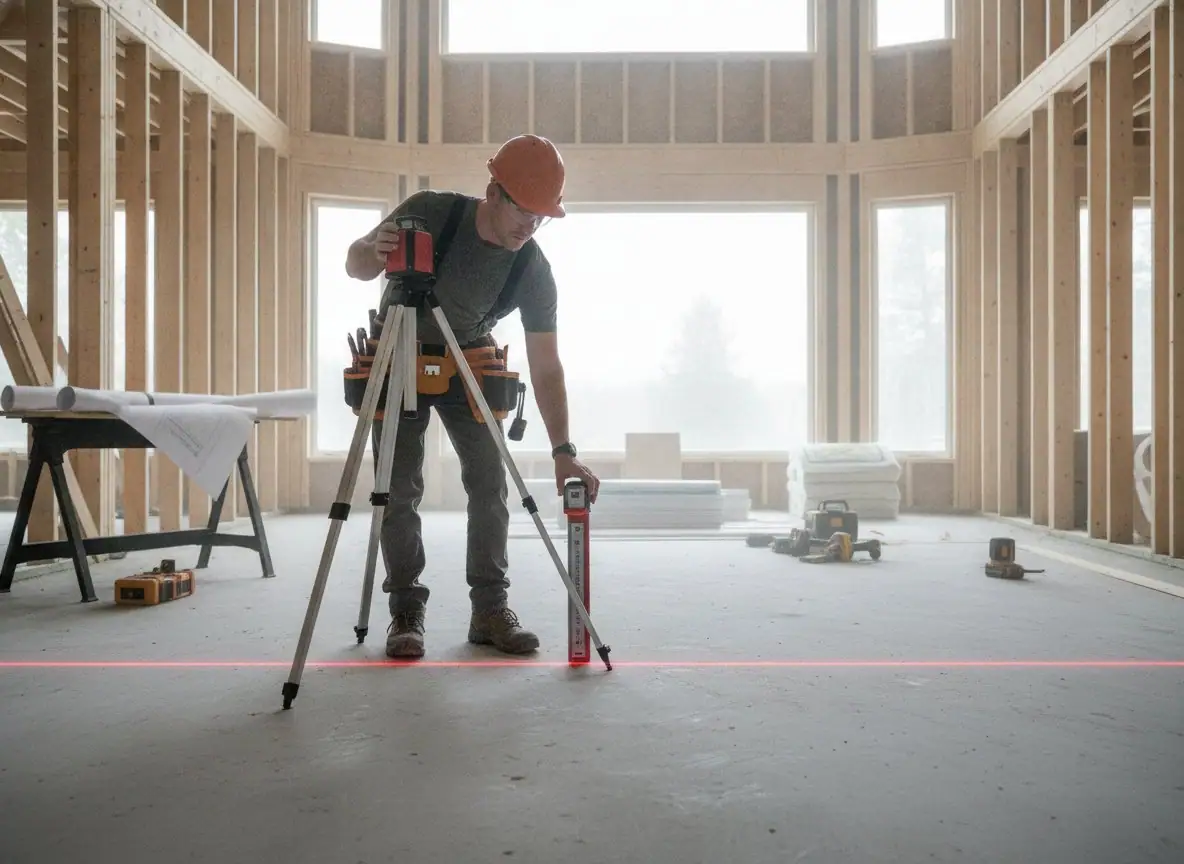
Our certified inspectors evaluate every accessible area of the slab, interior, and exterior. We use digital elevation readers to measure differential settlement to within one-tenth of an inch, map crack patterns and widths, assess drainage conditions relative
- 02
Soil and Site Analysis (Days 1–3)
We review available geotechnical data for the local soil profile and, when necessary, conduct on-site probing to assess clay depth, moisture content, and bedrock proximity. This is particularly important for properties in areas like Belterra and Headwaters, wh
- 03
Customized Repair Plan and Cost Estimate (Days 2–5)
Based on our findings, we prepare a written repair plan specifying method, number of piers or patches required, timeline, and a fully itemized cost estimate. We explain every line item and answer all questions before any work begins.
- 04
Site Preparation and Access (Day of Repair)
We protect landscaping, interior flooring, and utility access points. In homes with interior tile or hardwood over the slab, we carefully plan access points to minimize disruption. Dripping Springs homes with limestone outcroppings near the structure may requi
- 05
Foundation Repair Execution (1 to 5 Days Depending on Scope)
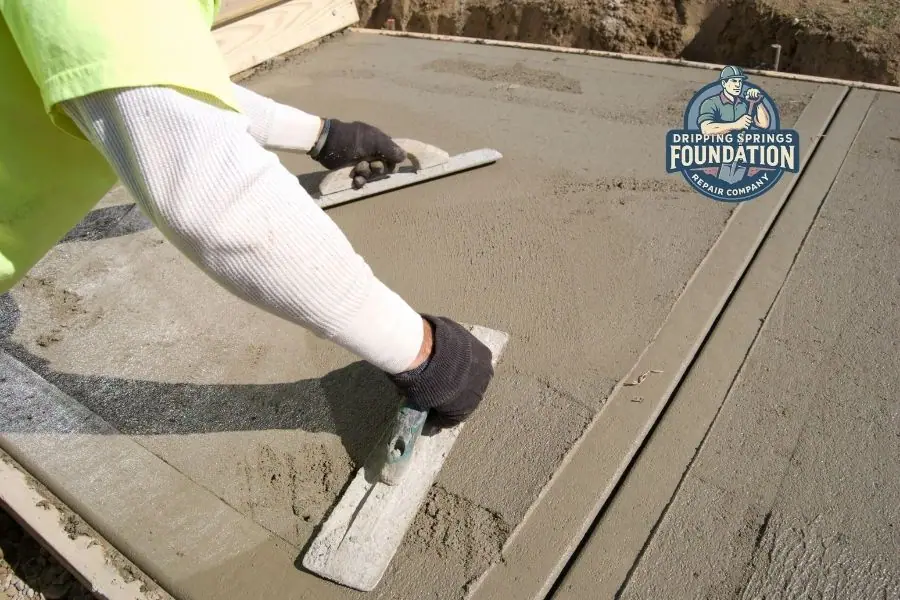
Piers are installed, concrete patching is completed, or slab lifting procedures are performed according to the approved plan. Our crews work efficiently to minimize displacement for occupied homes.
- 06
Elevation Verification and Structural Confirmation
After repair, we conduct a full re-evaluation of floor elevations and document the restored measurements against the pre-repair baseline. All crack repairs are inspected for continuity and bond strength.
- 07
Drainage and Maintenance Consultation
We walk each client through specific drainage improvements and maintenance practices recommended for their Dripping Springs property to reduce the risk of future settlement.
Slab Foundation Repair Methods Used in Dripping Springs
Steel Push Pier Installation
Steel push piers are hydraulically driven through unstable soil layers until they reach load-bearing strata — typically the Edwards Plateau limestone beneath Dripping Springs properties. These piers are the most reliable solution for significant differential settlement and are commonly used in neighborhoods like Caliterra and Headwaters where clay depth exceeds six feet. Cost ranges from $1,200 to $1,800 per pier installed.
Helical Pier Installation
Helical piers are screwed into the ground using torque rather than hydraulic pressure, making them well-suited for lighter structures, additions, or areas where access is restricted. They are frequently used for Dripping Springs homes with lower load requirements or where shallow limestone prevents push pier advancement.
Polyurethane Foam Lifting (Slabjacking)
For slabs that have settled uniformly and where underlying voids exist without severe structural compromise, we inject high-density polyurethane foam through small drill holes. The foam expands, fills voids, and raises the slab back toward its original elevation. This method is faster and less disruptive than pier installation and is applicable to driveways, garage slabs, and interior concrete floors in Dripping Springs homes. Learn more about our concrete foundation repair services.
Foundation Patching and Crack Repair
For isolated surface cracks that do not indicate active structural movement, epoxy injection and polyurethane crack sealing restore integrity to the concrete. These approaches are appropriate for minor cosmetic or non-structural damage common in newer Dripping Springs homes experiencing initial soil settlement. Explore our foundation patching services.
Learn moreSlab Foundation Repair Cost in Dripping Springs, TX — What to Expect
The cost of slab foundation repair in Dripping Springs varies based on multiple property-specific factors. Below are realistic cost ranges based on common repair scenarios in this market.
Typical Cost Ranges
- Minor crack patching and sealing: $500 – $2,500
- Polyurethane foam lifting (slabjacking): $1,500 – $5,000 depending on slab area and number of injection points
- Steel push pier installation: $1,200 – $1,800 per pier; most Dripping Springs homes require 8 to 20 piers for full perimeter repair, totaling $10,000 – $30,000
- Helical pier installation: $1,500 – $2,200 per pier
- Interior pier installation: $1,500 – $2,500 per pier, plus flooring restoration costs
- Full foundation restoration for a 2,000 sq. ft. home: $15,000 – $40,000 in severe settlement cases
Read moreShow less
Dripping Springs-Specific Cost Factors
Pier depth requirements in Dripping Springs are often greater than in flat Austin suburbs due to variable clay depth over limestone. Deeper piers require more materials and labor time, increasing per-pier cost. Properties in the Edwards Aquifer recharge zone may require additional site considerations. Homes on sloped lots — common throughout the Hill Country — often require more piers on the downhill side to achieve proper load transfer. Access constraints created by cedar breaks, limestone outcroppings, or narrow lot configurations can also add to project cost.
We provide fully itemized written estimates. Contact us at (512) 883-7253 for a no-obligation assessment. Request your free foundation inspection.
Dripping Springs Neighborhoods We Serve
Caliterra
This master-planned community along Onion Creek features homes built primarily from 2016 onward on deep Vertic clay profiles. Many homeowners in Caliterra are encountering first-cycle soil movement as the landscape matures. Foundation monitoring and early pier intervention are common recommendations here.
Headwaters
Headwaters is one of Dripping Springs’ newer premier communities, with homes built after 2018 on mixed clay-limestone terrain near the Barton Creek headwaters. The shallow limestone in some lots creates uneven load distribution that can cause early cracking even in recently constructed homes.
Belterra
Built in the early-to-mid 2000s, Belterra was one of the first large subdivisions in the area. Homes here are now 15 to 20 years old and entering a phase where cumulative clay movement, mature tree root systems, and aging drainage infrastructure are combining to produce measurable foundation settlement.
Historic Downtown Dripping Springs Area
Older commercial and residential structures along Mercer Street and US-290 present unique challenges including aged concrete, unreinforced slabs, and decades of root encroachment requiring careful, customized repair approaches. Explore our home foundation repair services.
Foundation Maintenance Tips for Dripping Springs Homeowners
Preventative maintenance is especially important in Dripping Springs’ challenging soil environment. These practices can meaningfully reduce the likelihood and cost of future foundation repairs.
- Maintain consistent soil moisture: Install a soaker hose system around your foundation perimeter and run it during extended dry periods to prevent clay shrinkage beneath your slab. In Dripping Springs summers, this may mean irrigating two to three times per week from June through September.
- Grade your yard away from the foundation: Ensure the soil slopes at least six inches over the first ten feet away from your slab to direct Hill Country rainfall away from the perimeter.
- Keep gutters and downspouts clear: During Dripping Springs’ intense spring storms, clogged gutters can dump hundreds of gallons directly against the foundation in minutes.
- Manage trees near the structure: Avoid planting trees within 15 feet of the foundation. For existing trees closer than 20 feet, consider installing root barriers.
- Inspect annually after the dry season: Schedule a professional foundation check each fall, after the summer drought period, when cumulative soil shrinkage is at its maximum for the year.
- Repair plumbing leaks promptly: Slab plumbing leaks are a major cause of localized soil saturation and heave in Dripping Springs homes. Monitor water bills for unexplained increases.
- Avoid excessive watering near the foundation: Overwatering flower beds against the house can cause localized soil expansion and differential heave, particularly in clay-rich soils. Learn about crawl space moisture protection.
Why Choose Dripping Springs Foundation Repair Company
When it comes to slab foundation repair cost and quality in Dripping Springs, homeowners deserve a partner who understands this specific region — not a national franchise applying one-size-fits-all solutions to Hill Country geology.
Our team has developed deep familiarity with the soil profiles, limestone depths, drainage patterns, and construction eras that define foundation performance across Dripping Springs and the surrounding communities. We know the difference between a Caliterra clay profile and a Headwaters limestone transition zone, and we design repair plans accordingly.
We believe in transparent pricing and detailed written estimates. Every cost proposal we provide includes a full breakdown of materials, labor, pier specifications, and projected timeline — no surprises, no high-pressure tactics. Our commitment is to recommend only what your foundation genuinely needs.
Read moreShow less
We serve not just Dripping Springs but the full Hill Country corridor including Wimberley, Bee Cave, Lakeway, and Buda, giving us broad regional context for how soil and climate conditions vary across the landscape. Call us at (512) 883-7253 or contact us online to schedule your inspection today.
FAQ
Frequently Asked Questions About Slab Foundation Repair Cost in Dripping Springs, TX
How much does slab foundation repair typically cost in Dripping Springs, TX?
Most slab foundation repair projects in Dripping Springs range from $5,000 to $30,000 depending on severity and scope. Minor crack repairs may cost $500 to $2,500, while full perimeter pier installation on a 2,000 to 2,500 square foot home commonly totals $15,000 to $30,000 given the pier depths required to reach stable limestone bedrock in this area.
Why do foundation repairs cost more in Dripping Springs than in flatter parts of Austin?
Several factors increase repair costs in Dripping Springs. The depth to stable limestone bedrock is greater and more variable here than in areas like Round Rock or Cedar Park. Sloped lots common in Hill Country subdivisions require more piers to achieve uniform load transfer. And the intensity of clay soil movement — driven by Dripping Springs’ drought-flood weather cycles — often means more active damage requiring more comprehensive repair.
How long does slab foundation repair take in Dripping Springs?
A pier installation project for a typical Dripping Springs home takes one to three days for the repair itself, following the inspection and planning phase. More complex projects involving interior piers, significant slab elevation changes, or access challenges on wooded Hill Country lots may take up to five days. Most homeowners can remain in the home during repairs.
Does homeowner’s insurance cover slab foundation repair in Texas?
Standard Texas homeowner’s insurance policies typically exclude foundation damage caused by soil movement, settling, or expansion — which are the primary causes of slab damage in Dripping Springs. Coverage may apply if damage results from a sudden covered event such as a plumbing leak. We recommend reviewing your policy and consulting with your insurer before assuming coverage.
How do I know if my Dripping Springs home needs pier repair or just crack patching?
This is determined by a professional inspection using elevation measurement tools. If your slab has experienced differential settlement — meaning one area is measurably lower than another — pier installation is typically required to restore structural support. If cracks are non-structural and the slab remains level, patching may be sufficient. We never recommend pier installation unless our elevation data confirms active settlement. Schedule an inspection to find out exactly what your home needs.
Are foundations in newer Dripping Springs subdivisions like Caliterra or Headwaters at risk?
Yes. New construction does not equal immune foundations. Many homes built in Caliterra and Headwaters since 2015 are now experiencing first-cycle clay movement as the soil beneath them adjusts to the load of the structure. The first five to fifteen years after construction are often when clay soil displacement is most active. Early monitoring and proactive drainage management are the best strategies for newer home owners.
What is the most cost-effective way to address minor foundation cracks in Dripping Springs?
For non-structural cracks without active settlement, epoxy or polyurethane injection patching is the most cost-effective solution, typically ranging from $500 to $2,000. However, it is critical to confirm through professional inspection that the cracks are truly non-structural before choosing a patching-only approach. Treating a settling foundation with only surface patching will not prevent further movement and may mask symptoms that worsen over time. Learn more about our foundation patching services.
Do you offer payment plans for foundation repair in Dripping Springs?
We work with homeowners to discuss financing options and phased repair approaches when full repairs represent a significant investment. Contact our office at (512) 883-7253 to discuss what options may be available for your specific project scope.
Get Your Slab Foundation Repair Cost Estimate in Dripping Springs Today
If your Dripping Springs home is showing signs of foundation movement — sticking doors, floor cracks, uneven surfaces, or exterior brick cracking — don’t wait for the next drought season to accelerate the damage. The sooner a foundation issue is identified and addressed, the lower your repair cost is likely to be.
Dripping Springs Foundation Repair Company provides thorough, honest foundation inspections and fully transparent cost estimates for homeowners throughout Dripping Springs, Belterra, Caliterra, Headwaters, and the surrounding Hill Country communities. We understand your soil. We understand your climate. And we deliver repairs built to last in this specific environment.
Call us today at (512) 883-7253 or submit a request online to schedule your no-obligation foundation inspection and cost assessment.
Get in touch
Find foundation repair help near you
Request a free estimate online or give us a call — our team will follow up quickly.
- Call us(512) 883-7253
- Visit4002 US-290 Unit a7, Dripping Springs, TX 78620
- HoursMon-Sun: 7:00 am – 7:00 pm